ESP32 vs STM32: Which Microcontroller to Pick
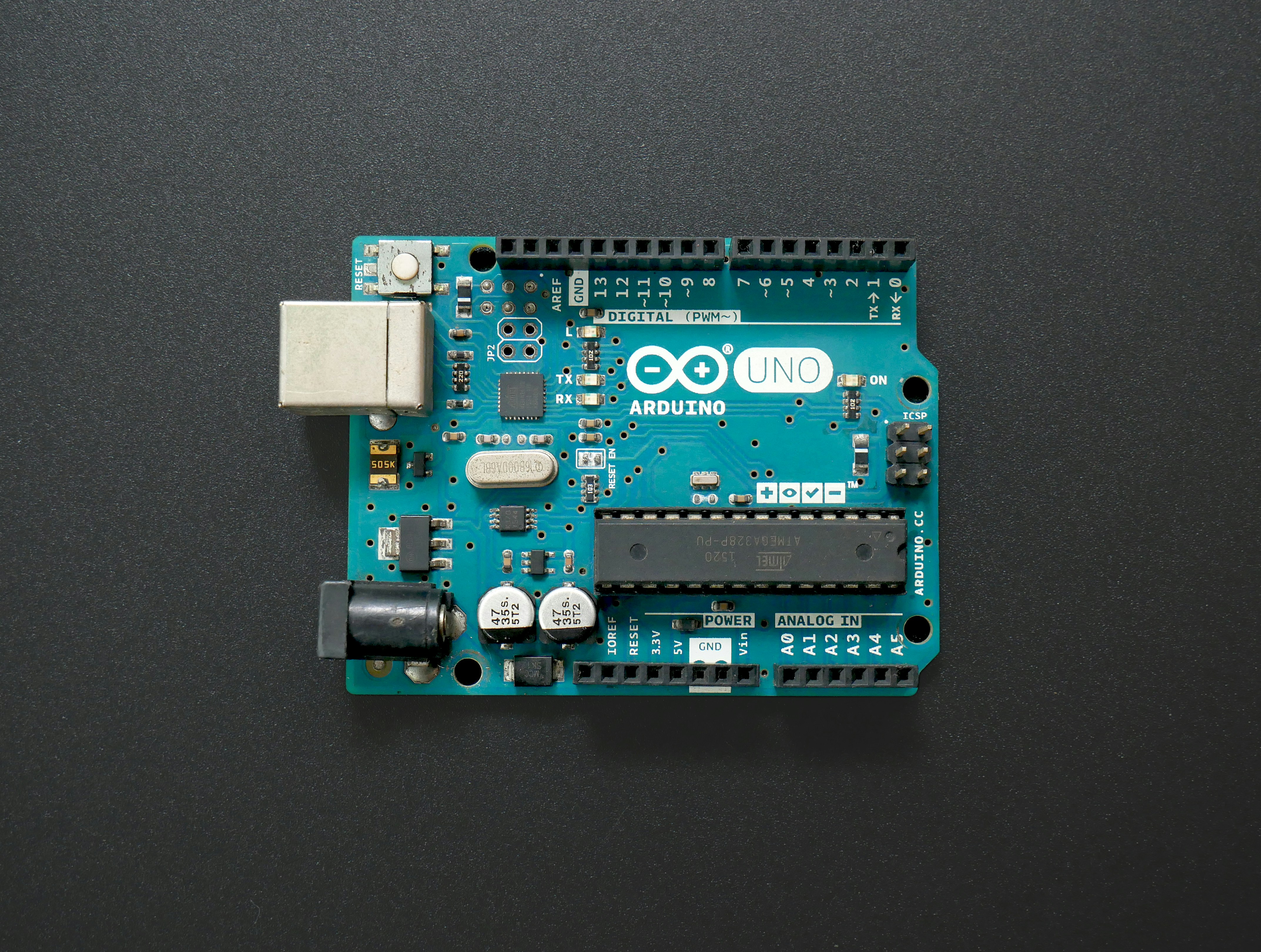
If you've been working with microcontrollers for a while, you've probably hit the point where basic Arduino Uno boards feel limiting. Two popular upgrade paths are ESP32 boards and STM32-based Arduino-compatible boards. Both offer significant improvements over traditional 8-bit Arduinos, but they excel in different areas.
Important note: "ESP32" is actually a family of chips with different features. The original ESP32 uses Xtensa LX6 cores, while newer variants like ESP32-S3 use LX7, and ESP32-C5 uses RISC-V [1]. Always check the specific SoC datasheet for your exact board.
Let's break down the real differences to help you pick the right board for your next project.
Chapter 1: Raw Performance and Efficiency
| Feature | ESP32 | STM32 |
|---|---|---|
| CPU Architecture | Xtensa LX6/LX7 or RISC-V* | Arm Cortex-M0+ to M7/M33 |
| Clock Speed | Up to 240MHz | 48MHz - 480MHz |
| Cores | 1-2 cores (chip dependent) | 1 core (some H7: dual M7+M4) [4] |
| FPU | SoC dependent (S3 has FPU) [2] | M4F/M7 have single-precision FPU [3] |
| Instruction Set | 32-bit RISC | 32-bit RISC (Thumb-2) |
| Real-time Performance | Good | Excellent |
| Interrupt Latency | ~2-3μs | ~0.25-1μs |
*Architecture varies by model: original ESP32 (LX6), S3 (LX7), C5 (RISC-V)
ESP32: Dual-Core Powerhouse
The ESP32 runs dual Xtensa LX6 cores at up to 240MHz. That's serious processing power for a microcontroller. The dual-core setup lets you dedicate one core to WiFi/Bluetooth tasks while the other handles your main application.
Real-world performance highlights:
- Handles complex signal processing without breaking a sweat
- Can run FreeRTOS with multiple tasks smoothly
- Fast enough for real-time audio processing
- Floating-point unit makes math-heavy calculations snappy
STM32: Arm Cortex Efficiency
STM32 boards typically use Arm Cortex-M cores (M0+ to M7) running 48MHz to 480MHz depending on the specific chip. The Cortex-M architecture is designed for efficiency - you get more work done per clock cycle.
STM32 advantages:
- Superior interrupt handling and response times
- More predictable timing for real-time applications
- Better code density (smaller compiled programs)
- Dedicated hardware units for specific tasks (timers, ADCs, etc.)
Winner: STM32 for precision timing and deterministic behavior. ESP32 for raw computational power and multitasking.
Chapter 2: Power Consumption
| Power Mode | ESP32 | STM32 (L-series) |
|---|---|---|
| Deep Sleep/Standby | 10-150μA* | Sub-μA (L-series example) |
| Light Sleep/Stop | 0.8mA | 1-30μA |
| Active (CPU only) | 20-40mA | Varies by series** |
| WiFi Active | 160-260mA (peaks higher) | N/A |
| Bluetooth Active | 100-200mA (mode dependent) | N/A |
| Wake Sources | GPIO, Timer, Touch, ULP | GPIO, RTC, LPUART |
*Depends on configuration/peripherals enabled [5]
**L-series optimized for low μA/MHz; H-series draws more at high clocks [6]
Power consumption note: All numbers are approximate and depend on configuration, voltage, RF transmit power, peripherals, and measurement method [7]. Always consult datasheets for your specific use case.
ESP32: Built for Battery Projects
The ESP32 was designed with IoT applications in mind, so power management is excellent. The ESP32 can wake from deep sleep via GPIO, timer, or external signals. Perfect for battery-powered sensors that need to phone home occasionally.
STM32: Ultra-Low Power Champion
STM32L series boards are specifically designed for ultra-low power applications. Advanced power gating lets you shut down unused peripherals completely.
Winner: STM32, especially the L-series, for absolute minimum power consumption. ESP32 wins for wireless battery projects where you need the connectivity.
Chapter 3: Development Experience
ESP32: Arduino IDE Made Easy
Programming ESP32 boards feels like using a supercharged Arduino:
- Install via Arduino Board Manager - no complex setup
- Massive library ecosystem (ESP32-specific + Arduino compatible)
- Web-based configuration tools
- Over-the-air (OTA) updates built-in
- Excellent documentation and community support
The ESP32 Arduino core abstracts away most complexity. WiFi connection? Three lines of code. Bluetooth? Just as simple. OTA updates are well-supported with built-in examples and libraries [1], but you must enable and configure them.
STM32: More Setup, More Control
STM32 development has more options, which means more complexity:
- Arduino IDE support via STM32duino
- STM32CubeIDE for advanced features
- PlatformIO integration
- Direct register access when you need it
- Professional debugging tools available
The learning curve is steeper, but you get access to every hardware feature. STM32CubeMX can generate initialization code, which helps with complex peripherals.
Winner: ESP32 for beginners and rapid prototyping. STM32 for professional development and when you need full hardware control.
Chapter 4: Connectivity and Versatility
| Connectivity | ESP32 | STM32 |
|---|---|---|
| WiFi | 2.4GHz 802.11 b/g/n; 5GHz on C5* [13] | External module required |
| Bluetooth | Classic + BLE (chip dependent) [1] | External module required |
| USB | Native USB on S2/S3/P4; bridge on older boards [8] | Native USB on many models |
| CAN Bus | External transceiver needed | Built-in controller (most models) |
| Ethernet | Via SPI module | Built-in MAC (some models) |
| SPI Buses | 3 | 1-6 depending on model |
| I2C Buses | 2 | 1-4 depending on model |
| UART | 3 | 1-8 depending on model |
| Touch Sensing | Capacitive pins (chip dependent) [9] | External IC required |
| ADC | Two 12-bit ADCs, 18 channels** [9] | 1-3x 12-bit (up to 24 channels) |
| DAC | 2x 8-bit [10] | 1-2x 12-bit (some models) |
*ESP32-C5 adds dual-band 2.4 + 5GHz Wi-Fi 6 [13]
**ADC2 has limitations when WiFi is active [9]
ESP32: Wireless by Default
Every ESP32 board includes WiFi and Bluetooth. The wireless capabilities are the ESP32's killer feature. Building IoT projects is straightforward - connect to WiFi, send data to your server, done.
STM32: Peripheral Paradise
STM32 boards offer incredible peripheral variety. Want to control motors precisely? STM32 has dedicated timer modes. Need multiple SPI buses? Many STM32s have 3-6 available.
Winner: ESP32 for wireless connectivity. STM32 for diverse wired interfaces and specialized peripherals.
Chapter 5: Memory and Storage
| Memory Type | ESP32 | STM32 Range |
|---|---|---|
| Internal ROM | ~448KB | N/A (boot ROM) |
| Internal SRAM | ~520KB (original ESP32) [11] | 2KB - 1MB |
| SPI Flash | 4MB typical on modules [12] | 16KB - 2MB internal |
| External Flash | Via SPI (up to 16MB) | Up to 64MB via QSPI |
| External PSRAM | 4-8MB on WROVER modules [12] | Up to 32MB via FMC* |
| EEPROM | Emulated in flash/NVS | Hardware or emulated* |
| Cache | Instruction + data cache | ART accelerator (some series) [3] |
| DMA | Peripheral-specific DMA | 2-16+ channels (model dependent) |
*Depends on STM32 family and external memory interface
ESP32: Flash and PSRAM Options
The partition system lets you have multiple firmware versions or store data separately from code.
STM32: Wide Range of Options
STM32 memory varies dramatically by model, letting you pick exactly what you need for your application and budget.
Winner: Depends on your needs. ESP32 offers more standardized, generous amounts. STM32 lets you pick exactly what you need.
Chapter 6: Ecosystem and Community
ESP32: Espressif's Focused Approach
Espressif maintains the ESP32 ecosystem tightly:
- Consistent hardware across manufacturers
- Regular Arduino core updates
- ESP-IDF for advanced development
- Strong documentation
- Active forums and Discord communities
STM32: STMicroelectronics' Professional Tools
STM32 ecosystem is more enterprise-focused:
- Professional development tools (STM32CubeIDE)
- Extensive application notes
- Reference designs for specific applications
- Large community but more scattered across platforms
- Industry-standard debugging and profiling tools
Winner: ESP32 for hobbyist-friendly community. STM32 for professional development resources.
Chapter 7: Price Comparison
| Board Type | ESP32 | STM32 |
|---|---|---|
| Basic Dev Boards | $5-12 | $2-8 (Blue Pill clones) |
| Official Boards | $15-25 (ESP32-DevKitC) | $10-25 (Nucleo) |
| With Display/Sensors | $15-25 | $20-35 |
| High Performance | $8-15 (ESP32-S3) | $20-50 (STM32H7) |
| Wireless Included | Always | Never (add $5-15) |
| Debugger Included | No (use UART) | Yes (ST-Link on Nucleo) |
*Prices vary by region, marketplace, and board quality [3]
ESP32: Excellent Value
You're getting WiFi, Bluetooth, and significant processing power for the price of a basic Arduino.
STM32: Wide Price Range
The cheapest STM32 boards undercut ESP32, but you lose wireless connectivity. Professional debugging capabilities are often included on official boards.
Winner: STM32 for absolute lowest cost. ESP32 for best features-per-dollar when you need wireless.
Chapter 8: Which Should You Choose?
Pick ESP32 If:
- You need WiFi or Bluetooth connectivity
- You're building IoT or wireless projects
- You want the simplest development experience
- You need good processing power for signal processing
- Battery life is important but not critical
- You're prototyping quickly
- Check specific SoC: Need native USB? Pick S2/S3 [2]. Need 5GHz WiFi? Pick C5 [13].
Pick STM32 If:
- You need ultra-low power consumption (L-series) [6]
- You're building precision timing applications
- You need specific peripherals (CAN, advanced timers, etc.)
- You want the cheapest possible solution
- You're developing commercial products
- You need professional debugging tools
- Check specific family: Need sub-μA standby? Pick L-series [6]. Need 480MHz performance? Pick H7 [4].
The Verdict
Neither microcontroller is universally better - they're optimized for different use cases. ESP32 excels at connected projects where development speed matters. STM32 shines for specialized applications where you need specific peripherals or ultimate efficiency.
For most hobbyists starting with 32-bit microcontrollers, ESP32 is the better choice. The wireless capabilities and development simplicity make it incredibly versatile. Once you've outgrown what ESP32 offers, STM32 provides the next level of control and specialization.
Both represent huge upgrades from 8-bit Arduino boards. You really can't go wrong with either choice - just pick the one that matches your project's priorities.